


Sunday, June 2, 2013
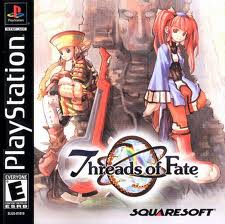
Thread of Fate (PS 1)


Wednesday, May 29, 2013
The Game of Life (PS 1)

The Game of Life, also known simply as LIFE, is a board game originally created in 1860 by Milton Bradley, as The Checkered Game of Life (and later produced by the Milton Bradley Company of Springfield, Massachusetts). The Game of Life
was America's first popular parlor game. The game simulates a person's
travels through his or her life, from college to retirement, with jobs,
marriage, and possible children along the way. Two to six players can
participate in one game, however, variations of the game have been made
to accommodate a maximum of only eight or ten players.The modern version
was originally published 100 years later, in 1960. It was created by
toy and game designer Reuben Klamer and was "heartily endorsed" by Art
Linkletter. It is now part of the permanent collection of the
Smithsonian's National Museum of American History. It later spawned a book, The Game of Life: How to Succeed in Real Life No Matter Where You Land (Running Press), by Lou Harry.


Saturday, May 11, 2013
The Adventure of Little Ralph (PS 1)

Bart's
class is interrupted by “Robbie the Automaton,” a robot created by the
Knowledgeum, a new museum that offers a hands-on approach to learning
about science. The family go there the following Saturday, where Bart
wanders off and walks into an exhibit of the planet Mars.
He meets Ralph, who is in the process of being pushed into a giant ear
by Kearney, Jimbo, Nelson and Dolph. When Ralph is freed by a center
employee, Marge and Chief Wiggum are there to meet him. Marge observes
that Ralph has a vivid imagination and learns that he has no friends to play
with; she arranges a play-date for Ralph to spend time with a horrified
Bart. During the play-date, Ralph shows Bart his swing set, his
sandbox, and a rock where he met a leprechaun, who tells him to burn
things.Bart, who does not want to be seen in public with Ralph, has a
scare when the two encounter Nelson's gang of bullies riding a stolen
vehicle with a video (Bart covers this up by hastily convincing Ralph to
hide in a prickly bush), but later exploits it when he discovers
Ralph's father has a police master key capable of opening any door in
Springfield. Bart and Ralph thus steal the key and decide to enter
several closed stores at night, such as a toy store and a bakery, having
fun doing whatever the two can imagine. After encountering Nelson and
his gang, the boys go to an unused penitentiary. When Ralph objects
because he is afraid, the bullies throw him and Bart into a muddy puddle
and leave to pick huckleberries — but not before tossing the key into
the penitentiary. Ralph and Bart enter the prison to retrieve the key,
and in the process stumble onto a room housing an old electric chair.
Eager with curiosity to test it they melt the couple from atop a wedding cake they had gorged themselves on earlier that night. The two flee when an elderly guard approaches, but accidentally leave the electric chair armed.
Screenshoots :


Saturday, May 4, 2013
Tales of Phantasia 2 (PS1)

Tales of Destiny continues the trademark Linear Motion Battle System (LMBS) of the Tales series,
with the E-LMBS (Enhanced Linear Motion Battle System), there are some
graphical enhancements to the system as it was first implemented in
Tales of Phantasia. Nevertheless, the combat is still very similar to
the first game in the series, taking place on a 2-D plane where
characters and enemies act in real time. Typical RPG onventions of HP,
TP, experience, and leveling apply. Melee and ranged attacks are
executed in real time, with spell casting
requiring a chanting time that increases directly with the complexity
of the spell being cast. When the chanting of a spell is complete,
game-time temporarily stops as the spell animation is carried out and
damage is assigned, so spells essentially act as interrupts. Special
melee and ranged attacks do more damage or have more hits than normal
attacks, but require technical points, or TP, to be consumed for use.
Also, the battle system rewards the player with extra experience for
stringing together multi-hit combos. The end result of this break from
traditional turn-based RPG battle systems is a more fast-paced and
reaction oriented system that behaves more like a fighting game and
less like a typical Final Fantasy-esque title.Pre-battle options
include assigning spells and special attacks to buttons and
button-directional combinations,
changing the party's battle formation or order, and assigning AI
behavioral patterns for your computer-controlled allies. Certain spells
can also be taken off the active casting list for computer-controlled
allies. At any one time, the AI is controlling the other characters in
the party that the player is not directly commanding, taking general
strategic orders into consideration when acting. The player controls
one character directly at a time, but can switch to other characters
and issue special attack or spell orders for any character on command
using an in-battle menu system. This menu system enables the player to
use items, spells, or special attacks on the fly in battle. Also, the menu
system allows the use of general commands given to the entire party
during battle, along with instant adjustment of previous strategy or
formation orders. All of these control options were innovative at the
time, even when considering that Tales of Phantasia was released in
1995 with nearly identical tactical options.


Tuesday, April 23, 2013
Tales of Destiny 2 (PS 1)

Tales
of Destiny continues the trademark Linear Motion Battle System (LMBS)
of the Tales series, with the E-LMBS (Enhanced Linear Motion Battle
System), there are some graphical enhancements to the system as it was
first implemented in Tales of Phantasia. Nevertheless, the combat is
still very similar to the first game in the series, taking place on a
2-D plane where characters and enemies act in real time. Typical RPG
onventions of HP, TP, experience, and leveling apply. Melee and ranged
attacks are executed in real time, with spell casting requiring a
chanting time that increases directly with the complexity of the spell
being cast. When the chanting of a spell is complete, game-time
temporarily stops as the spell animation is carried out and damage is
assigned, so spells essentially act as interrupts. Special melee and
ranged attacks do more damage or have more hits than normal attacks, but
require technical points, or TP, to be consumed for use. Also, the
battle system rewards the player with extra experience for stringing
together multi-hit combos. The end result of this break from traditional
turn-based RPG battle systems is a more fast-paced and reaction
oriented system that behaves more like a fighting game and less like a
typical Final Fantasy-esque title.Pre-battle options include assigning
spells and special attacks to buttons and button-directional
combinations, changing the party's battle formation or order, and
assigning AI behavioral patterns for your computer-controlled allies.
Certain spells can also be taken off the active casting list for
computer-controlled allies. At any one time, the AI is controlling the
other characters in the party that the player is not directly
commanding, taking general strategic orders into consideration when
acting. The player controls one character directly at a time, but can
switch to other characters and issue special attack or spell orders for
any character on command using an in-battle menu system. This menu
system enables the player to use items, spells, or special attacks on
the fly in battle. Also, the menu system allows the use of general
commands given to the entire party during battle, along with instant
adjustment of previous strategy or formation orders. All of these
control options were innovative at the time, even when considering that
Tales of Phantasia was released in 1995 with nearly identical tactical
options.
Screenshoots :


Monday, April 15, 2013
Tales of Destiny (PS 1)

Tales
of Destiny continues the trademark Linear Motion Battle System (LMBS)
of the Tales series, with the E-LMBS (Enhanced Linear Motion Battle
System), there are some graphical enhancements to the system as it was
first implemented in Tales of Phantasia. Nevertheless, the combat is
still very similar to the first game in the series, taking place on a
2-D plane where characters and enemies act in real time. Typical RPG
onventions of HP, TP, experience, and leveling apply. Melee and ranged
attacks are executed in real time, with spell casting requiring a
chanting time that increases directly with the complexity of the spell
being cast. When the chanting of a spell is complete, game-time
temporarily stops as the spell animation is carried out and damage is
assigned, so spells essentially act as interrupts. Special melee and
ranged attacks do more damage or have more hits than normal attacks, but
require technical points, or TP, to be consumed for use. Also, the
battle system rewards the player with extra experience for stringing
together multi-hit combos. The end result of this break from traditional
turn-based RPG battle systems is a more fast-paced and reaction
oriented system that behaves more like a fighting game and less like a
typical Final Fantasy-esque title.Pre-battle options include assigning
spells and special attacks to buttons and button-directional
combinations, changing the party's battle formation or order, and
assigning AI behavioral patterns for your computer-controlled allies.
Certain spells can also be taken off the active casting list for
computer-controlled allies. At any one time, the AI is controlling the
other characters in the party that the player is not directly
commanding, taking general strategic orders into consideration when
acting. The player controls one character directly at a time, but can
switch to other characters and issue special attack or spell orders for
any character on command using an in-battle menu system. This menu
system enables the player to use items, spells, or special attacks on
the fly in battle. Also, the menu system allows the use of general
commands given to the entire party during battle, along with instant
adjustment of previous strategy or formation orders. All of these
control options were innovative at the time, even when considering that
Tales of Phantasia was released in 1995 with nearly identical tactical
options.


Wednesday, April 10, 2013
Tactic Ogre (PS 1)

Ogre
Battle: The March of the Black Queen begins in the outskirts of the
Zeteginan Empire, twenty-four years after the founding of the empire
through conquest. The main character is leading a revolution against
this empire, which has turned to evil through the use of black magic by
the mage Rashidi.The game begins with the seer Warren using tarot cards
to ask a series of questions to determine the player's suitability as
leader of the revolution. There are several questions out of a fixed set
which are randomly asked, each of which is associated with one of the
twenty-two Major Arcana cards of divinatory tarot. Each question has
three possible answers: one righteous, one evil, and one neutral. After
the player finishes answering the questions, Warren wishes luck for the
revolution and the game begins. The player's answers to these questions
determine the Lord's (main character's class) abilities and starting
units.Ogre Battle mixes movement elements of a real-time strategy game
with the character development and combat of a role-playing game. The
game consists of a series of battles in which the player deploys units
to fight against enemies and liberate occupied towns and temples. A
variety of character types can be recruited, ranging from common to
rare, many of whom can change class with experience points. As a result,
the character will either evolve or become an entirely new soldier with
different abilities. Potential recruits consist of several historical
and mythological figures, including knights, ninjas, wizards, angels,
griffins, witches, and others. The player is free to organize multiple
units of five fighters or less, with the limit being lower when larger
characters are present. Additionally, time passes on the tactical map,
alternating between day and night. In accordance with this element,
vampires and werewolves will only be seen in the evening, with the
former appearing in coffins during the day, and the latter appearing as
normal men.Each stage has a boss whose defeat signals the completion of
the mission. Both during and after the stage, towns and temples can be
visited to gain information or items. The game also features an
alignment system, both for the revolution as a whole (reputation) and
for individual characters (alignment and charisma). These parameters are
influenced by how the game is played.There are twenty-five main stages
in the game, with some variation possible in how the stages are played.
There are also four hidden stages accessible through the main game with
an additional stage as an easter egg. Note that the game can be
completed without finishing all the stages. There are thirteen different
endings to the main game, depending on the conduct of the player during
the course of the game


Saturday, April 6, 2013
Syphon Filter 3 (PS 1)

Gabriel
Logan and Lian Xing are operatives of The Agency, on the trail of
Erich Rhoemer, an international terrorist. In August of 1999, Agent
Ellis attempted to infiltrate Rhoemer's narcotics operation in Guácimo,
Costa Rica, but was discovered and executed by ex-KGB agent Mara
Aramov. Rhoemer then ordered Anton Girdeux, a French mercenary, to burn
down the plantation to hide the evidence of their Syphon Filter
research.In Washington, D.C., Edward Benton, the Agency Deputy Director,
is giving a report on Logan's mission to Agency Director Thomas
Markinson and a shadowy, unnamed figure. Several weeks later, Gabe and
Lian investigate a mysterious viral outbreak in the Himalayas, which
leaves only a single survivor; a fact that Lian describes as
impossible.The game begins one month after the events in Costa Rica.
Rhoemer and his terrorists have launched an assault on Washington, D.C.
Gabe defeats Pavel Kravitch, Rhoemer's communications expert, which
allows him to gain entry to the Washington Metro. Once inside, an
explosive goes off leaving Gabe trapped underground. He pursues Aramov,
catching her in the tunnels before heading to a nearby park to aid in
the defusing of several viral bombs, where he learns that Aramov has
escaped custody. Making his way to the Freedom Memorial, Gabe takes on
and defeats Jorge Marcos, Rhoemer's trigger man, and Girdeaux.Lab
results show that Syphon Filter is a deadly next-generation biological
weapon, capable of targeting specific demographics. Jonathan Phagan,
PHARCOM's CEO and founder, attends a gala at his new Expo Center Museum
in New York City, where he is taken captive by Aramov and Benton is
revealed as a double agent. Gabe kills Benton, frees Phagan, but Aramov,
who is captured, again escapes custody.Gabe goes to Rhoemer's secret
base in Rozova, Kazakhstan. He kills Rhoemer's commander Vladislav
Gabrek and destroys the base, but Lian is taken captive and presumably
killed by Rhoemer.Gabe is then sent to infiltrate Rhoemer's stronghold
in Uzhhorod, Ukraine, which is a Gothic cathedral. Injecting viral
patients with what he believes is an antidote, Gabe descends deeper into
the cathedral to rescue Lian; who explains that there is no 'global'
antidote for the virus. They also find Phagan, who is later killed by
Aramov. She decides to help Gabe and Lian, since she has nowhere else to
go.
Screenshoots :


Syphon Filter (PS 1)

Gabriel
Logan and Lian Xing are operatives of The Agency, on the trail of Erich
Rhoemer, an international terrorist. In August of 1999, Agent Ellis
attempted to infiltrate Rhoemer's narcotics operation in Guácimo, Costa
Rica, but was discovered and executed by ex-KGB agent Mara Aramov.
Rhoemer then ordered Anton Girdeux, a French mercenary, to burn down the
plantation to hide the evidence of their Syphon Filter research.In
Washington, D.C., Edward Benton, the Agency Deputy Director, is giving a
report on Logan's mission to Agency Director Thomas Markinson and a
shadowy, unnamed figure. Several weeks later, Gabe and Lian investigate a
mysterious viral outbreak in the Himalayas, which leaves only a single
survivor; a fact that Lian describes as impossible.The game begins one
month after the events in Costa Rica. Rhoemer and his terrorists have
launched an assault on Washington, D.C. Gabe defeats Pavel Kravitch,
Rhoemer's communications expert, which allows him to gain entry to the
Washington Metro. Once inside, an explosive goes off leaving Gabe
trapped underground. He pursues Aramov, catching her in the tunnels
before heading to a nearby park to aid in the defusing of several viral
bombs, where he learns that Aramov has escaped custody. Making his way
to the Freedom Memorial, Gabe takes on and defeats Jorge Marcos,
Rhoemer's trigger man, and Girdeaux.Lab results show that Syphon Filter
is a deadly next-generation biological weapon, capable of targeting
specific demographics. Jonathan Phagan, PHARCOM's CEO and founder,
attends a gala at his new Expo Center Museum in New York City, where he
is taken captive by Aramov and Benton is revealed as a double agent.
Gabe kills Benton, frees Phagan, but Aramov, who is captured, again
escapes custody.Gabe goes to Rhoemer's secret base in Rozova,
Kazakhstan. He kills Rhoemer's commander Vladislav Gabrek and destroys
the base, but Lian is taken captive and presumably killed by
Rhoemer.Gabe is then sent to infiltrate Rhoemer's stronghold in
Uzhhorod, Ukraine, which is a Gothic cathedral. Injecting viral patients
with what he believes is an antidote, Gabe descends deeper into the
cathedral to rescue Lian; who explains that there is no 'global'
antidote for the virus. They also find Phagan, who is later killed by
Aramov. She decides to help Gabe and Lian, since she has nowhere else to
go.
Screenshoots :


Super Shoot Soccer (PS 1)

Super
Shot Soccer, known in Japan as Bakuretsu Soccer , is a 2002 soccer
simulation video game, which was developed and published by Tecmo for
the PlayStation. It is Tecmo's second and last soccer game released for
the PlayStation, after J-League Soccer: Jikkyō Survival League.Released
at the height of the 2002 FIFA World Cup and late in the PlayStation's
life, comes this title with Captain Tsubasa-alike or superhuman soccer
players coming from all over the world. The game features over 30
national teams (those who have qualified for the 2002 World Cup) that
have at least two special powers (some of the special or elite teams
like the Hong Kong team are hidden) ranging from special passes to
protective abilities to a boost in speed to auxiliary skills to even the
goalkeeper shooting a little spirit-bomb type attack that mows down
players in an exaggerated Shaolin Soccer fashion. The player also has a
few typical customizable options, but it's main draw is the special
abilities and team match-ups.The moves for each team are based on their
country's symbols, sights, and culture. For example, the Scandinavian
teams can change player into a hulking Viking boat or the Brazilians can
change into the Christ the Redeemer statue to temporarily block a path
to goal. Special abilities can be done with L1 plus either Triangle,
Square, or "X". Different special moves use different amounts of
players' teams special energy. Also, every team has a powerful player
with an "S" over their head, who can make attacks they specialize in
more powerful. The players can also use old-fashioned passes and
footwork to outmaneuver its opponent, though characters move a little
stiffly, especially on turns. It was done in part to simulate more
realistic movement in the sport.
Screenshoots :


Friday, April 5, 2013
Super Robot Wars Alpha Gaiden (PS 1)

All
the games follow a basic structure: when a stage begins, the character
receives introductory dialogue between playable characters, leading to
the scenario on the battle field. To complete a scenario, the player
must accomplish scenario objectives. Some scenarios are longer, with
multi-part missions or have new objectives added as the story unfolds.
On battle field, the player and enemy take turns to order their units
with commands available, such as movement, attacking, forming squads and
casting "Spirit Commands", a set of magic-like spells unique to each
pilot. Once the scenario is cleared, more dialogue is exchanged between
characters before the player is taken to an intermission menu. Here,
units can be upgraded or optional parts installed, characters' stats and
skills can be changed or upgraded, and other maintenance actions can
be performed before the player continues on with the game.Many games
also have hidden features that can only be gained through a special
sequence of events or completing optional challenging objectives. Some
of these bonuses include extra stages, different endings, captured
enemy machines and special upgrade for specific units, such as the IWSP
Pack for the GAT-X105 Strike Gundam. In some games, these are called
"Skill Points" ("Battle Masteries" in the North American localizations)
and the difficulty of the game increases accordingly.In most games,
the player selects or is given a Banpresto original character and
machine, who is connected to the overarching storyline which ties
together the events of the constituent anime for the game. Some
featured anime also has their plots intertwined: in Super Robot Wars
Alpha, the White Fang from New Mobile Report Gundam Wing allies with
Paptimus Scirocco's rebellion from Mobile Suit Zeta Gundam, resulting
in the two enemy forces working together.One noteworthy aspect of the
Super Robot Wars games is that character death happens rarely. Players
will often have the chance to prevent the death of an ally, as depicted
in his or her animated series, while some games take this a step
further and prevent heroic deaths freely, without extra effort on the
player's part. Additionally, some enemies can be convinced (usually
those who are not completely villainous, or who have good intentions)
to abandon the antagonists and join the player, whether they do so in
their respective series or not. When these concepts are combined,
players can create a team that has no chance of existing within the
original series.


Super Robot Wars Alpha (PS 1)

All
the games follow a basic structure: when a stage begins, the character
receives introductory dialogue between playable characters, leading to
the scenario on the battle field. To complete a scenario, the player
must accomplish scenario objectives. Some scenarios are longer, with
multi-part missions or have new objectives added as the story unfolds.
On battle field, the player and enemy take turns to order their units
with commands available, such as movement, attacking, forming squads and
casting "Spirit Commands", a set of magic-like spells unique to each
pilot. Once the scenario is cleared, more dialogue is exchanged between
characters before the player is taken to an intermission menu. Here,
units can be upgraded or optional parts installed, characters' stats and
skills can be changed or upgraded, and other maintenance actions can be
performed before the player continues on with the game.Many games also
have hidden features that can only be gained through a special sequence
of events or completing optional challenging objectives. Some of these
bonuses include extra stages, different endings, captured enemy machines
and special upgrade for specific units, such as the IWSP Pack for the
GAT-X105 Strike Gundam. In some games, these are called "Skill Points"
("Battle Masteries" in the North American localizations) and the
difficulty of the game increases accordingly.In most games, the player
selects or is given a Banpresto original character and machine, who is
connected to the overarching storyline which ties together the events of
the constituent anime for the game. Some featured anime also has their
plots intertwined: in Super Robot Wars Alpha, the White Fang from New
Mobile Report Gundam Wing allies with Paptimus Scirocco's rebellion from
Mobile Suit Zeta Gundam, resulting in the two enemy forces working
together.One noteworthy aspect of the Super Robot Wars games is that
character death happens rarely. Players will often have the chance to
prevent the death of an ally, as depicted in his or her animated series,
while some games take this a step further and prevent heroic deaths
freely, without extra effort on the player's part. Additionally, some
enemies can be convinced (usually those who are not completely
villainous, or who have good intentions) to abandon the antagonists and
join the player, whether they do so in their respective series or not.
When these concepts are combined, players can create a team that has no
chance of existing within the original series.


Thursday, April 4, 2013
Super Tokusatsu Taisen (PS 1)

I
think some of the Super Sentai-based articles, particularly the
individual heroes and villains pages for all the post-Kyōryū Sentai
Zyuranger shows, are in dire need of cleanup. Some of the page titles,
like Zyurangers and Dairangers could use some disambiguation (i.e.
"Zyuranger (characters)" and "Dairanger (characters)"), while others
(like Tatsumi family and Ozu family) are in definite need of having new
page names since their current ones are way too vague. I don't know why
the villains are given separate pages when it would be easier to simply
to list both, heroes and villains in an overall character lists for each
series (i.e. "Characters in Kyōryū Sentai Zyuranger", "Characters in
Gosei Sentai Dairanger"). I personally don't like having separate
character pages for each series, since most of these shows are
relatively short and self-contained anyway and any relevant information
could simply be summarized instead of having over-explain every single
plot detail, but I'll set aside that for now Any suggestions? Jonny2x4
(talk) 20:51, 7 June 2010 (UTC)They are in need of clean up, but I do
not think that renaming the pages or combining the pages on the heroes
and villains is at all necessary. They are currently very large because
all of the shows prior to Gekiranger are focused mostly on the entire
plot summary of the characters throughout the series, rather than
relying on an episode list to convey all of that information. It is also
better to have the two pages separate because the heroes' and villains'
pages include information that would not belong in a combined character
list, namely the arsenal/mecha of the heroes and the arsenal/monsters
of the villains. Page titles like "Zyurangers", "Dairangers", etc. are
not the best, but there are no other suitable disambiguations, whereas
"Tatsumi family", "Ozu family", "Search Guard Successor Foundation",
"Geki Jūken Beast Arts", etc. are excellent disambiguations, so I do not
know why you think "Tatsumi family" and "Ozu family" are too vague.
Disambiguation exists to separate two similarly titled items (as is done
for the articles for protagonists of the Kamen Rider Series). If we
were to treat these pages as we do the Kamen Rider ones, that would mean
that for series that do not have protagonists as part of some larger
organization that we can categorize them and all related characters, we
would have to go with "Kyoryu Sentai Zyuranger (team)" rather than
"(characters)", as the latter implies it is a totally inclusive
character list for the series, which I already stated is something I
don't really see helpful or happening.


Subscribe to:
Posts (Atom)


